Episode Transcript
[00:00:00] Speaker A: Foreign.
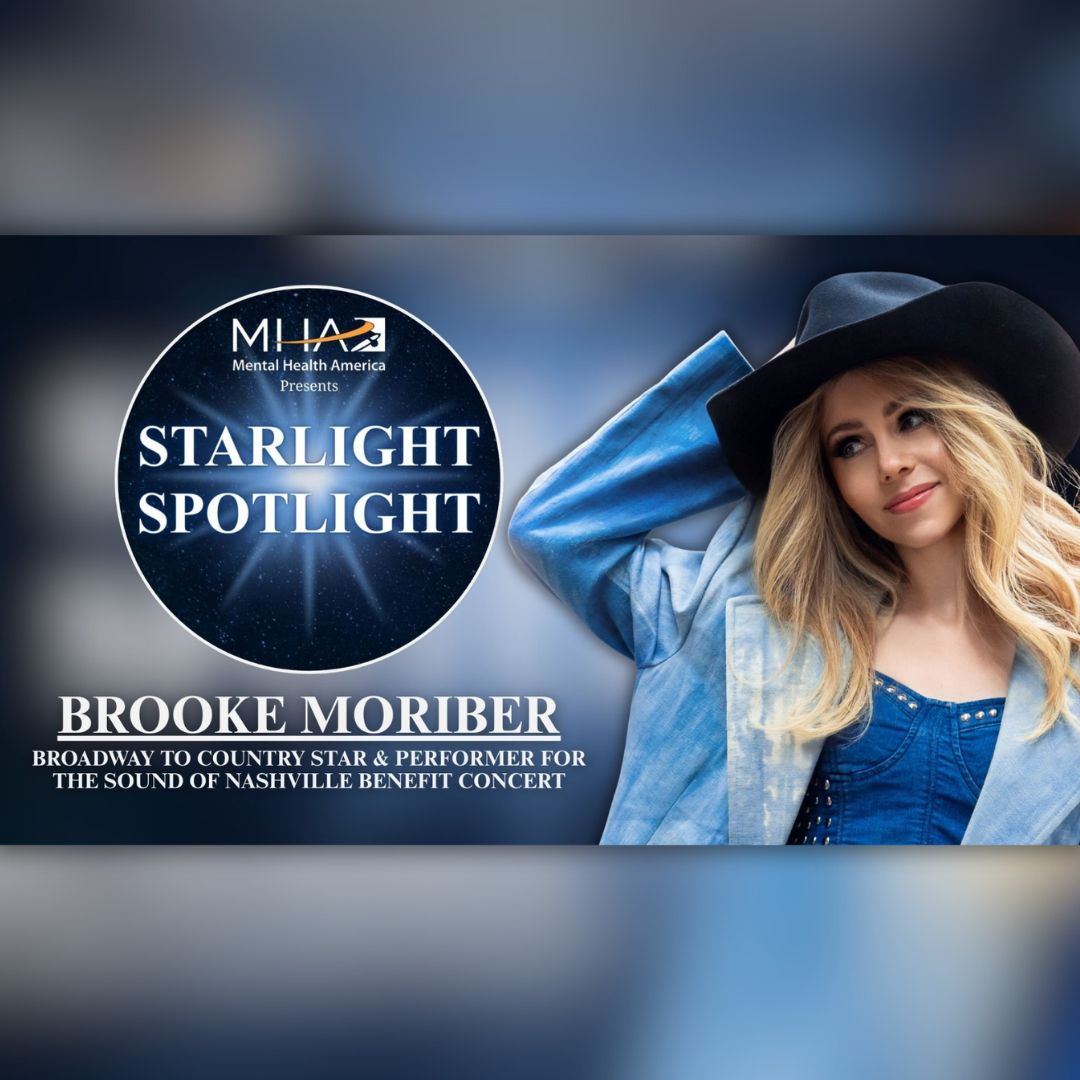
[00:00:06] Speaker B: Hey there, everybody, and thank you very much for tuning into your best you MHA's podcast on conversations around mental wellness. Greatly appreciate you being here today. And we got a starlight spotlight, our segment where we speak with people within the entertainment industry about their success and their psyche. We're speaking with one of the performers that's going to be at the Sound of Nashville in the Queen City performance at the BART of ON that's happening on Tuesday, October 6th here in Poughkeepsie. It's going to be an incredible show and I'm really excited to be speaking with her today. She's a native New Yorker, just like Ian, who we spoke to earlier, and she's a Broadway to now country star. She started off on Les Mis on Broadway as the young cassette, and she has worked in Broadway, worked in tv, and she's making her name in the country music scene. So with us today, we have acclaimed singer songwriter Brooke Morber. Brooke, how are you?
[00:00:56] Speaker A: I'm good. I'm so happy to be here today. Thank you for having me.
[00:00:59] Speaker B: Absolutely. Thank you for being a part of this. Thank you for being a part of the concert that'll be in October.
It sounds like it's so far away, but it will be here in tomorrow.
[00:01:09] Speaker A: Yeah.
[00:01:09] Speaker B: Oh, yeah. Without a doubt. Without a doubt. Are you in New York today? Are you in Nashville today?
[00:01:13] Speaker A: I am in New York.
[00:01:14] Speaker B: Okay, cool. All right. I think you're my first New York interview. Everybody else has been somewhere else.
[00:01:20] Speaker A: Well, I'll be in Nashville in, like, two days.
[00:01:22] Speaker B: Gotcha. So you're almost there.
[00:01:24] Speaker A: Very neat.
Where are you located?
[00:01:27] Speaker B: Poughkeeps, New York.
[00:01:28] Speaker A: So, yeah.
[00:01:29] Speaker B: Yep. Our house. Oh. Hour and a half, two hours, depending on what route.
[00:01:34] Speaker A: Born and raised around there or not?
[00:01:35] Speaker B: Yeah, Born and raised Poughkeepsie. Yep.
[00:01:37] Speaker A: Very cool.
[00:01:38] Speaker B: Yeah. And you're born and raised in New York City, right?
[00:01:41] Speaker A: Yes, I am.
[00:01:42] Speaker B: Very good. Greenwich Village, if I got my research right. Terrific. Neat. Well, what an incredible place to be raised, especially raised in music, like the history of that area of New York City. Incredible.
[00:01:54] Speaker A: It's amazing. I actually grew up right across the street from Washington Square park and all of the folk musicians and street players just, you know, I wonder if that kind of got in my blood a little bit.
[00:02:06] Speaker B: I wouldn't be surprised. I wouldn't be surprised. It was just naturally all around you. So the fact that you are a native New Yorker, you've performed in so many venues in and around the area. Have you ever had a chance to ever perform at or visit The Bardavan before.
[00:02:19] Speaker A: I actually have not.
[00:02:20] Speaker B: Okay, so this is going to be your first time for you. Excited?
[00:02:23] Speaker A: I'm in Bardavan. Exactly.
[00:02:25] Speaker B: Lovely. Now, I know that you've worked closely with Ian in the past, but have you had a chance to ever work with or meet any of the other artists that we've been speaking with? We got. Let's see, we got Craig Morgan, Maggie Rose, Jake Banfield, and then, of course, yourself.
[00:02:39] Speaker A: In the end, I have not worked with anyone else there, but I'm a huge fan of all of them.
And. But Ian and I are very dear friends and we write together all the time. And he's a wonderful. People don't know this about him, but he's also a wonderful producer. And next week, I'm actually getting in the studio with him and we're doing three songs together that he's going to be at the helm producing, so I'm really excited for that.
[00:02:57] Speaker B: Oh, that's terrific. So what started your musical collaboration with Ian? How did you guys meet in the first place?
[00:03:03] Speaker A: Well, we met through a label, Reviver, and I actually had a song that I had written back in 2020 called Holy Ground, which was about two people making a promise to each other that whatever was going on in the world around them was not going to touch their relationship and where they stand together as Holy Ground. And I was looking for a duet partner for it, and. And we'd gone through a couple of ideas, and then Ian came along and he was just about to sign with Reviver, and we just immediately clicked. Singing with Ian is a dream, and we have been close friends ever since, and we recorded that song together.
[00:03:37] Speaker B: Lovely. Now I know you, or I should say, I believe I know at least when you make your special guest appearance, you will be performing with Ian. Can we expect that song in your set together?
[00:03:47] Speaker A: We're debating it's either going to be that song or another song that we wrote together. So we haven't really talked about it yet, so I'm not sure we'll surprise y'. All.
[00:03:55] Speaker B: It's still early enough in the process so you can figure it out. Absolutely.
[00:03:58] Speaker A: We'll probably write and do another one before then, and then it might be even another song.
[00:04:02] Speaker B: Yeah, you never know. Well, hey, as you said, you're going to be seeing and working with them in just a few days, so you never know what will come out of that. Maybe something will be birthed because of this whole process. You never know. That's awesome.
Yeah, Very cool. So you've been with Reviver for how many years now? Obviously, David was the one that got us together right now. And you've been working with Ian. So how long you been with Reviver?
[00:04:25] Speaker A: I think it's been since 2019.
[00:04:28] Speaker B: 2019. Okay.
[00:04:30] Speaker A: It's been that long. That's crazy. Time really flies. Scary.
[00:04:33] Speaker B: It does fly. But you signed with them pre Pandemic, so that must have been interesting to be able to position and then reposition yourself in a pre and post pandemic world, working with a music label and trying to promote yourself as an artist. What was that like signing in 2019, and then 2020, everything shuts down.
[00:04:50] Speaker A: You know, it was such a blessing in disguise for me. Not that I wish Covid ever existed, but I was going, going, going. I was two weeks in Nashville, two weeks in New York, two weeks in Nashville, two weeks in New York for, like, you know, the whole year, and just kind of very tired and still figuring myself out artistically.
And we were about to really go into the studio and record the songs that I had, and I wasn't sure at that point. And then 2020 hit, and I remember I actually flew home. I think I had Covid because I had the most horrific cough when I got home, and I was, like, pretty sick, but they couldn't test. Then I just went to the doctor, and he was just like, you might have Covid, I don't know. But I landed in New York right before everything shut down, and part of me was like, I can breathe. I'm like, it sucks that there's a pandemic, but I can rest for a minute. And I became my most creative self in 2020, and I really wrote some of my best songs, and I had a lot of zoom sessions with other songwriters, and I figured myself out how to do some production stuff myself, which you're forced to do when you can't depend on anybody else. So that was. For me, it was very productive, and I wanted to make the most of the downtime that I could. And I figured myself out as an artist during 2020.
[00:06:04] Speaker B: What an incredible time. There was a silver lining in it all where you're able to kind of regroup and find yourself.
[00:06:09] Speaker A: Yes. I feel. I hate to say that I feel kind of bad, because I know that I know people who lost people, and it was the most terrific time ever. And it was, you know, it was scary for me because I actually live with an autoimmune disease. So, you know, whether I had Covid to begin with or not, like, we were very afraid of me. Getting it.
[00:06:24] Speaker B: Oh, interesting. So with your autoimmune disease and you're having to worry about COVID you probably took a lot of extra precautions and probably really didn't rush out when a lot of other people
[00:06:37] Speaker A: and all the things we were doing, everything, it was so crazy.
[00:06:41] Speaker B: Oh, my gosh. I don't blame you. I don't blame you. I remember I was dating this girl at the start of the pandemic, and she, too, was having issues with that she herself had an autoimmune disease. And it really taught me a lot about empathy and really trying to watch out for others. Unfortunately, that relationship didn't last longer than the pandemic. But, you know, it really taught me a lot about that time, and it really helped me to see outside of myself, which is a huge thing, and I hope some people got that out of it. Some did, some didn't.
It was a very interesting time period. Funny you say how you're finding yourself artistically. I actually was. You know, as I'm going through my research and I'm studying up, I saw you posted back in January.
You got into the 2026 is the new 2016 trend, and you showed off your rocker Persona in that, which was very, very cool. I saw the lightning earrings, the big rocker hair and whatnot.
[00:07:32] Speaker A: I was all Hayley Williams back then.
[00:07:34] Speaker B: You even said in the caption, I may have to channel my inner HA Williams again, which I love.
[00:07:39] Speaker A: I said that. But, yeah, I'm a little obsessed with her. Can you tell?
[00:07:41] Speaker B: No, I love that. Well, hey, some paramour can never go wrong with that. So, yeah, tell me a little bit about your rocker side and how you transitioned from rock to country.
[00:07:50] Speaker A: Oh, gosh, I don't even know why I went there originally. But, you know, I grew up in New York City. I performed on Broadway most of my life, even though I always wanted to be a recording artist. But, you know, I would write all these songs on the side whenever I had time, and I would get together with my band in the city, and, you know, I was trying to dance at two weddings for a long time, which eventually I realized you can't do, and we would just rock out. And I just loved being the rock star for a minute, you know what I mean? That was my rock star moment. So I just kind of embraced it. And for a while, I was kind of going down the whole pop rock kind of thing, and I was working with another label that brought me out to LA and did a bunch of rights out there.
And everyone kept saying to me, you know, I know you're from New York, but there's a little country in you and your writing style. There's a little country.
Have you ever thought about going to Nashville?
And my manager at the time ended up setting me up with a co write in Nashville. He's like, I'm going to send you out there. Just give it a try. Let me know what you think. And I didn't think it was going to be my thing. I always loved country music, but I wasn't like, it wasn't my main thing. I was listening to hip hop and R and B and, you know, Tori Amos and stuff like that.
And I just, you know, my, you know, my parents, you know, grew up listening to Linda Ronstadt and Kris Kristofferson in that country. Classics, classics. But when I got to Nashville and I got into my first writing session, it was like a lightning. Speaking of lightning bolt earrings. But it was like a lightning bolt hit me and I was like, oh, wow, okay, this is home. This is the way that I like to write. I like to really get into the lyrics and like, you know, just.
I fell in love with Nashville. I fell in love with the entire Nashville experience. I never knew what a writer's round was before that. And you know, it's like sitting in someone's living room and a bunch of people are just playing songs and telling stories. And I fell in love with the community, all of that.
And not to segue, but speaking of writers rounds, I now, you know, I still reside in New York and Nashville. I split my time between the two, but I wanted to find a reason to still do what I do, but do it in New York City. And when I say a writer's round in New York, people are like, what's a writer's round? And that's how I used to be. So I developed selfishly because I wanted to have a reason to still stay here a little bit because I get the best of both worlds. I get Nashville and New York. So I developed this concept for a series that we now do every two months at the Bitter End. It's become really successful. It's called National New York. And I host, produce and perform in a Nashville style writers round, where we fly in some of the best writers and performers from Nashville. We also have New York City performers, people from all over the place, but we do a Nashville style writers round at the Bitter End in New York City. It's really cool.
[00:10:30] Speaker B: That is amazing. I've heard of it. I've been meaning to make it to One of them, when I found out about it, definitely come and. Well, one thing, our CEO, Andrew o'. Grady, I don't know if you had a chance to meet or speak with him yet, but he's had the pleasure of coming to one of your Nashvilles in New York and he said that he absolutely loved the experience, enjoyed it so, so much. And he wanted me to send those regards. He's busy at the moment, but so
[00:10:52] Speaker A: much to me, really, that really does. Because it's a lot of work. I will tell you, each show feels like I'm planning a wedding.
It's a big. It's. It's a big investment.
[00:11:02] Speaker B: Yeah. And not.
[00:11:03] Speaker A: Yeah.
[00:11:04] Speaker B: Not just that, but obviously at the location that you're having in the Bitter End. What a historic venue, hosting some of the biggest up and coming artists. Like, well, more than just up and coming, but like when big artists, but when they were still up and coming, like Bob Dylan's in the world and then all these rockers that have through ever since then, like, incredible, incredible place. I've had some friends who have played there. Wonderful spot. It's on my bucket list. Hopefully one day. But what's that like?
What's it like to be in a room that's so immersed in music history?
[00:11:37] Speaker A: It feels so weirdly comforting to be there. I feel like the Bitter End is the first place I went up to in an open mic when I was just teaching myself to play the guitar. And I never played in front of anyone before. And I was like, I got to get this out of my system before I go to Nashville with this thing. Because I started out as mostly a singer who played piano and wrote on the piano. And the cool thing about the veteran is they do have a real piano, which Lady Gaga has played, like all the greats. And I get to every now and then, if I want to play a song on the piano, I'll play a song on the piano too, which is great. But you feel the history when you're in there. And I feel so blessed that I get to do this in my hometown in such.
Just a historic building and place. And I also am on this mission to keep this music scene up in New York because a lot of the clubs have closed. And what the Bitter End has done is amazing. They have survived through so much. But, you know, we. We lost Rockwood Music Hall, I think like a year and a half ago, which was.
I mean, that was my second home for a long time. So a lot of the clubs have closed and, you know, I. There's so much talent in New York City that, you know, a lot of people have moved to Nashville because the rents were cheaper there and. But there is such a wonderful music community in New York City, and the Bitter End is helping to keep that going.
[00:12:50] Speaker B: And not just the Bitter End helping to keep it going, but you're helping to keep it going. And it's a wonderful series that you're
[00:12:55] Speaker A: doing my little part in it, you know, because I love my city so much and I love my people here so much.
[00:13:01] Speaker B: So that's terrific. What we were saying before we officially started this interview, the fact that you.
Where you grew up, you were right by what was a Washington Square Park.
Yeah. And the fact that you were hearing the folk music, you're hearing all the cultural music, it was all just bleeding in from the windows. And that you grew up with it. Not just that. The fact that you're being immersed by the music of Broadway as well and getting all that. It only makes sense is, like, here you are. It's like New York gave you your music, so now you're giving your music to New York. That's pretty beautiful.
[00:13:31] Speaker A: Oh, I love that how you said that. Yeah, I was teared up. That's really.
It's really beautiful how you just said that.
[00:13:39] Speaker B: I appreciate it, but you're the one who's living it, and that is the thing, that it's extremely beautiful. And I love that so, so much. Let's kind of backtrack a little bit. Let's rewind. And here you are. You're eight years old when you get your first Broadway role.
Most people will chase their lives to get a Broadway role, and you were able to achieve it at 8, and then you were able to keep going and, you know, make a career out of it being on several Broadway productions. So how much do you remember from that time period of being 8 and getting cast in Les Mis?
[00:14:11] Speaker A: It's weirdly, actually very clear to me a lot of things in my life. But that was very clear to me. And I do remember that my mom used to be an actress. My dad was a musician, too. And, like, they didn't want me to get involved with the industry. My mom had, you know, she's amazing actress, and, you know, she just didn't want to see me go through what she went through and.
But I. You know, this goes back to my always wanting to have been a recording artist, but I always had an obsession with the fact that you could have people's voices captured on. I think it was CDs at that point now it's not any of that anymore, but, like, that they live forever on, you know, almost, you know, the way that, like, in the movies, the acting lives forever. But something about voices being captured in recordings to me, and I was like, I want my voice to be on one of those. Like, I always wanted to be on one of those. It was a strange obsession I had as a kid. And I used to, you know, sing and dance around and pretend, you know. But then one night, my parents had gone to see Les Miserables, and they came home with a soundtrack, and they popped it in, and I was like, who's the little girl on there? I could do that. I want to do that.
And my parents are like, oh, no, no, no, no, no, no, no, no, no. None of that. None of that. And we had a bunch of friends and family over for Christmas that year, and I ended up getting up and singing in front of everyone. So strange, because I was not shy child. I'm actually a very shy adult. But I was just ready to get up and sing in front of everyone, not being on a stage and just do it.
And my mom's best friend said, you know, my cousin is actually a theatrical agent for children. And, you know, she's good. We should maybe.
So I begged and begged and begged and begged and begged, and they were like, okay, we're gonna put you on the phone with the manager. You can sing over the phone for the manager. And remember singing Somewhere Out There from American Tale for the manager.
[00:16:03] Speaker B: Oh, wow.
[00:16:04] Speaker A: I'm gonna get. You'd be really good for Les Miserables. I'm gonna get you an audition for a little Cosette. And my parents warned me, said, this is. We're gonna let you audition, but just want to prepare you. You know, there's a lot of disappointment in this industry. It's probably not gonna happen. Has nothing to do with how good you are, but just don't expect anything.
And I got.
Was three months of auditioning, but I got it. And it should always be that easy. It's never been that easy ever since.
But I mean, to be. To have my first taste of this industry, be on this magnificent stage with this magnificent orchestra doing this, like, role of a dream for a little girl. How could you not get bit by the bug? It was just an addiction ever since then. And I just. I loved doing musical theater so much. I did seven Broadway shows. I loved it with all of my heart.
But like I was saying before, I was dancing at two weddings. At a certain point, I was Writing and, you know, trying to perform with my band, and there's just no time to do both of them. And when I was a teenager, I actually ended up losing my eyesight for four years.
That's when I started really writing music. It became my best friend in a time that was the loneliest, scariest time of my life, because I was going through something that other people couldn't understand, and it was really scary. And I just fell in love with songwriting so much. So four years later, I got my sight back, which was kind of miraculous.
And, I mean, I was performing in shows without being able to see. It was. It was pretty.
It was nuts.
[00:17:32] Speaker B: Yeah.
[00:17:33] Speaker A: How you develop your other senses. I wasn't in pitch black.
I was. Everything was just blobs of color. I couldn't make out faces or anything. I just. Everything was blobs. I could see things were moving, but just.
And they had the eye disease that I had used to be the leading cause of blindness until they invented steroids and chemotherapy. So I was also.
In order to prevent me from going completely black, I was on megadoses of steroids for four years and chemotherapy and losing my hair. And I won't even discuss the side effects from taking steroids for four years, but I'm still suffering from that.
But four years later, the disease went into remission, which is very rare. It does happen, but I truly believe that music is what healed me.
At least it's the thing that got me through. And I. At a certain point in my life, I walked into my agent's office, and I had realized I had been dancing at two weddings for too long. And I really wanted to pursue the recording career. And I said, stop sending me on auditions. I'm going to go to Nashville and see how this goes. And that was the scariest thing I've ever done. It was like jumping off a cliff. It's like, bye, bye, Cobra health insurance for life. Bye, bye, 401k. Bye, bye, making a living. You know, exactly how much money you're getting every week and when you're not all of that. And I still have my family who's, you know, the Broadway community, but. And they're very supportive of what I've been doing. But, you know, it's scary walking away from that and thinking maybe I could never come back. And what if this other endeavor that I have is, like, too big of a dream and I'm, you know, just dreaming to be trying to make. So it's been a very scary journey for me, I have to say. But it feels right.
[00:19:07] Speaker B: Yeah. I'm sure it's been scary. Making any kind of leap like that is really difficult for having. You know, you said you did seven Broadway shows throughout your life there. When was the last show that you did there? And has it been just the singer, songwriter, recording artist ever since that point? Or was there ever a mix where you truly were dancing at two weddings?
[00:19:29] Speaker A: I wasn't successful on the recording side. Dancing at the two weddings that was, you know, I hadn't really figured myself out yet. I was having a blast and friends and all people were coming to see my shows, but it wasn't the level that I'm at doing it now.
But I. Yeah, so. So in a way, it was even scarier because I didn't know where it was going to go.
[00:19:51] Speaker B: Yeah.
[00:19:52] Speaker A: And I'm still terrified right now because, you know, I'm not where I want to be yet. You know, you're just constantly climbing, and it's not an easy business. And it's a totally different animal for me because, you know, I'm used to being the person for hire that plays a role, is directed and told what to do, signs a contract.
But this is. I'm the owner of my business. I'm the one who. And it's.
It's a very different animal. And now with social media and having to do all of that on top of it, it's. You know, it's a lot of work that isn't as much of the creative work that I want to be doing, but it's part of the job, which I have accepted.
And. Yeah, so it's. I forgot what your original question was. Yeah. Did I do my last show? I actually can't fully remember, but I just. I remember the transition was an iffy transition for me.
[00:20:42] Speaker B: Understandable. Understandable. To go from something like that to have a lot of the weight of your own career on your shoulders. Not to say that you didn't before, but as you said, you were hired to do a role, you were contracted, but now, yes, you are the head of your own business. You have to promote yourself as a business and going about that. What are some things about yourself that you've learned through this period as you've transitioned from a hired actor, hired musician, hired performer, to now, you know, promoting yourself as. Yourself as a musician, as essentially promoting yourself as a product in a way.
[00:21:18] Speaker A: I've actually learned a lot about myself doing this because authenticity is key in order for people to connect to your music. And I was always authentic doing what I was doing on Broadway, but I was bringing my authentic self into a role. So I was relating to this different person. I'm playing through my own experiences in life and my own feelings.
But this is so naked right now. It actually took me a very long time, and I'm still working on it, to realize that I just have to be myself. I'm not playing a part.
And in that I've had so much self discovery, it's almost been like this crazy therapeutic thing for me.
So I've just. I keep learning more about myself.
[00:22:03] Speaker B: Yeah. Now, you know, obviously, the concert that we're connecting for is for Mental Health America, and I'm in the MHA studios right now. So how mental health and identity go hand in hand.
I'm sure this experience has given you a completely new concept of what your identity has meant. Am I right?
[00:22:23] Speaker A: Yes. Yes. And, you know, it's like I said, it was a really scary transition for me. I was always very comfortable hiding behind a role, not letting people see all the true colors. I'm still struggling with that. It's a very difficult thing to expose yourself that way is.
[00:22:40] Speaker B: So you said a moment ago how you were a very outgoing kid, but you found that you're a little more shy as an adult. Do you feel it's because that you were able to hide behind roles as you were growing up and developing that now as you're expressing and identifying yourself, it's like, wait, who am I? And that's where some of that shyness might come in.
[00:22:57] Speaker A: It might be. I also think it's a. It's a perfectionist stress thing for me, where when you're a kid, for me, if I'm on a big, giant stage and it's like Madison Square Garden, I have no nerves. I don't know anyone in the audience. I'm just doing my thing and I'm having a blast. If I'm in a tiny room with friends and they're like, oh, could you get up and sing for us?
No.
When I was a kid, I didn't have the same.
Wasn't like, oh, my God, what if they actually think I suck?
[00:23:29] Speaker B: Or, you know, that inhibition wasn't there.
[00:23:33] Speaker A: The inhibition was not there.
And I'm not sure exactly when it shifted, but I think the more professional that I got, the more the stakes got higher.
And I stopped singing when we would have, like, a party for Christmas for FIFA, because I'm a professional now. What if they. What if they think I'm not that good? You know, on stage with strangers, it Feels almost like it could be more myself if there's, like, a big audience out there. It's a very interesting psychology for me, and I think other performers have it too, but some. Some don't. Some do.
[00:24:04] Speaker B: Yeah. When you get in your head and you do feel stressed out and overwhelmed like that, what are some coping mechanisms that you feel like you've been able to take on to really, really ground yourself, find yourself again.
[00:24:17] Speaker A: I meditate at least once a day.
[00:24:20] Speaker B: Very good.
[00:24:21] Speaker A: Especially before bed, because if I don't do my 20 minutes before I go to sleep, I'm the type of person that my brain will not stop. And I. I hate forcing myself to sit down and do that for 20 minutes before I go to bed. But it is the most incredible medicine.
I. You know, I would take that over a Valium or an Ativan any day. Give me meditation.
[00:24:41] Speaker B: Yeah, absolutely. You're able to center yourself and find yourself in it.
[00:24:45] Speaker A: You realize that you haven't been breathing all day long.
[00:24:47] Speaker B: Yes. People don't know how to breathe anymore. We don't breathe. It's amazing that we do stand upright.
[00:24:54] Speaker A: Yes.
[00:24:55] Speaker B: And you know what? When I went to music college, when I was at the College of St Rose, studying vocal techniques in singing, learning all these different vocal.
Vocal exercises, better ways of breathing, it's like, holy cow, I'm not really breathing. It's like I. I'm noticed. I like, I've noticed moments, too, where I'm like, it's been a while since I actually took a breath.
[00:25:16] Speaker A: Yeah.
[00:25:17] Speaker B: Yeah. Like, it's amazing that we all don't
[00:25:18] Speaker A: pass out all the time.
[00:25:20] Speaker B: Yeah. It's so odd. It's so odd. But breathing is such a meditative and therapeutic way of just centering ourselves, and it's at our fingertips, and we just don't do it.
[00:25:31] Speaker A: Do it. I know.
[00:25:33] Speaker B: And then, you know, and it's something that we take for granted because, you know, in our last breath, we. We can't take it back. So it's one of those things where it's like, yeah, learn to appreciate it and hone it while you can now. Which is.
Oh, my God, so huge. So while we're kind of getting into this health side of things, you've partnered yourself with a number of different causes. Obviously with the genetic disorder that removed your sight from a little bit. I know that you do some activist work with that, but then you also work with stand up to cancer as well. Could you walk through some of the activism work that you do and what it's been like to stand up for these causes.
[00:26:10] Speaker A: Yeah. Another one is a. There's a rare disease called epidermal lysis. Bullosa. It's EB is how everyone says it's an.
I've been very involved in that foundation as well.
You know, especially rare diseases don't get paid attention to like mine was. You know, I really kind of got very involved with EB for a while, and every now and then I do a show where we donate the proceeds to them. I'm very.
My newest song that I put out called Come Out. I have basically partnered with a couple of animal rescue organizations.
[00:26:41] Speaker B: Yes, I wanted to talk about that, too. For sure.
[00:26:43] Speaker A: Yes. Well, I recently lost my little boy, Sherlock, who was like my soulmate. He was a Holland Lop rabbit. It's about seven months since he passed, and I still cry once a day. I miss him so terribly. He was, you know, certain animals, certain people, you just get each other. And I had read all these books on rabbit behavior when I got him and we adopted him and we. I knew how rabbits spoke to each other with body language, and we communicated like. Like beyond talking. There was such a bond. And, you know, 11 years with him wasn't enough. And so when I originally recorded the song, it was before he passed. And then after he passed, when I released it, it reminded me of the feeling that of longing for his love again and say, I'm going to tear up again. And so I wanted to donate it in his honor to, you know, animal rescue.
[00:27:37] Speaker B: No, that's beautiful. And 11 years, that is an incredible amount of time to have with a pet. And I think you're just a beautiful ex. Example of how people can connect with animals and how loving it can be, and it can truly make somebody feel less alone. When people. I love people, but at the same time, people can suck. So to be able to have.
Right, to be able to have an animal in your life that connects with you and loves you to that regard, that is such an amazing connection.
And not just that. If I. I don't know if you said this, I know. I was looking it up.
Sherlock was a rescue, too. You hear rescues for, like, dogs and cats a lot. I feel like I don't hear that very often when it comes to rabbits or other pets. So how did Sherlock come into your life then, as a rescue? How'd that happen?
[00:28:26] Speaker A: So the crazy thing about rabbits that people don't know is that they are just as smart as cats and dogs. Sherlock. It took about a week to litter box train him. You know, they're not meant to live in cages. He was free roam anywhere he wants to go in the apartment. They're so well behaved. They're such social animals and they're so loving.
So I have. I grew up with dogs. I love dogs. I love cats. I love all animals. I'm like a crazy animal person. But my husband and I were talking about possibly getting a pet, and, you know, we were both dog people. But I found out from allergy testing that I have a very slight dog allergy and I always get rashes when the dogs lick me. So I was like, probably as a singer, not the best idea to live with a dog, because I don't need an itchy throat or congestion all the time, even though I would love it. But. But I had a rabbit when I was younger and I was living with my mom. We had a rabbit for about nine and a half years who we got as I was a kid and just brought him home in a little box, put him in a cage, and thought it was just going to be like that kind of animal. And then we realized, wow, this rabbit is so smart. Like, let's throw the cage out. We don't need it. It goes in one spot. We don't need to. So I became obsessed with rabbits, especially Holland Lop rabbits with the floppy ears. They're just. They're so cute. It's like. It's like a living, breathing plush toy. You can'.
I had sent my husband a couple of videos of rabbits and their owners and showing him, like, there they are, just like dogs, like. Because he had never experienced that before. And he's like, I don't know. I don't know about a rabbit. I don't know. And then I came home one day and he says to me, so I did something.
I don't know if you're gonna be ecstatic or really mad at me. And this was like, after six months of trying to convince him that rabbits are awesome.
[00:30:07] Speaker B: Yeah.
[00:30:07] Speaker A: And he showed me the picture of Sherlock and he said, this. This rabbit needs to be rescued. So I. I made an appointment for us to go get him, and I saw the picture and I was like, oh, my God, let's go right now. And I was like, but if I don't like not fully falling in love the minute I see him, we may need to think about it. We'll see. Because I. I didn't even know if I was ready for a pet, you know, so much in my life.
And I remember the woman carrying him out, and I didn't even see his face yet. But I felt like I was shot in the heart by Cupid's bow.
It was like crazy, the love I had for this animal. The minute I barely saw him. It was just his energy. I just felt his energy. And even when he passed, call me crazy, but the energy and the way he communicated with me that everything was okay. And the signs that I. You know, it. It made me truly believe that, you know, consciousness is forever. And he is taught. He taught so much in life, and he stoogered me.
Here we go.
[00:31:03] Speaker B: I know. I. I'm sorry. I didn't mean to make you cry or anything on this episode, but talk
[00:31:08] Speaker A: about him forever and have his memory live forever, because this even. Even one of my record producers in Nashville, he was just. He's. What he said is exactly. He defined exactly what it was. He said Sherlock was a force.
That animal was a. For. He was a force.
[00:31:23] Speaker B: That is a great way of being able to articulate that.
[00:31:26] Speaker A: No, beautiful, you know, And I was like, that's it. That's the word. He was a force. He taught me so much about, like, speaking of mental health. He taught me to live in the moment, which I've never been able to do, and just get out of myself. I've never had that experience before. And I don't know any human being that could have taught me that as much as someone I had to communicate with on a different level than actually speaking, you know, verbal language.
[00:31:52] Speaker B: Yeah, yeah. No, it transcends. It transcends anything above any kind of, like, English or vocal language that we speak. It just goes to show a lot. You know, it's interesting how we're talking right now about loss of a loved one. When I was younger, up until the pandemic, I did not really think much about mental health. I did not care for it all that much. People would tell me they were seeing a therapist. I'd scoff at it, and I just didn't have the education of it all. Then the pandemic happened, and so much came all at once. I was the caregiver for my grandparents. And then when my grandparents passed after a couple years, I remember through hospice, they were like, hey, you can get free grief counseling for this. And the first time in my life, I'm like, sign me up. Yes. And that was, like, the first window into any kind of mental health treatment or education in my life, or, like, direct at least. And it taught me a lot about myself, and it taught me a lot about where I am today, which is kind of crazy. That Six years ago, that Connor and this Conor, totally different planes of existence when it comes to grief, mental health, all that kind of education.
So let's talk about the. The grief and the loss side of all of it. You know, we have grief counselors here. We have people help get through those kinds of times. You know, let's talk about the way that both music and a love for an animal can help people get through those certain times. Have you found that, you know, not retreating into your music, but really falling into your music and dedicating come out? Has that meant something to you as the energy and that force continues to live on?
[00:33:27] Speaker A: It does. It has. And I've always felt like music gives me a reason for every good and bad thing that happens in life.
And, you know, dedicating it to animal rescue to me, I feel like I want to keep Sherlock's memory alive as long as I possibly can. And this is helping me extend that for sure.
Helping me heal.
[00:33:48] Speaker B: That's a beautiful thing. Yeah. What's up?
[00:33:50] Speaker A: Can we take a break for a second?
Drink so much water. I just have to run to the bathroom.
[00:33:54] Speaker B: Oh, no, you're fine.
[00:33:56] Speaker A: Sorry it's so unprofessional, but I literally just was like, I'm not going to make it, and I want to talk to you so much more because I'll be right back. I'm so good.
[00:34:05] Speaker B: You were fine, Brooke. You were fine.
[00:34:08] Speaker A: Oh, my goodness. Thank you so much.
[00:34:09] Speaker B: Not a problem. Not a problem.
[00:34:12] Speaker A: Very necessary.
[00:34:13] Speaker B: Understandable. You know what? Like, this is probably not making it into the final air, but I'm going to share. Share something with you that's really embarrassing and hopefully make you feel better.
So when I used to work in radio, obviously you're working in the studio. You only have X amount of time with whoever you're interviewing in a given moment. And now with radio, you only get maybe like five, ten minutes at most. So you got to make the most of that time for the sake of the story. I'll leave what celebrity out that I was speaking with, but they were a famous TV actor, and my stomach wasn't feeling well at all.
And it was bad. It was really bad, and I couldn't do anything about it. And I'm in the middle of this interview with them, and I'm like, I'm just going to have to ride this out. I'm just going to have to ride this out. Unfortunately, I did sharp my underwear in the middle of the interview.
[00:35:05] Speaker A: You're my hero.
[00:35:06] Speaker B: I.
[00:35:07] Speaker A: This has to go in the air.
[00:35:09] Speaker B: Maybe I will have to put it in.
Maybe I should keep it. But, yes, so it happens. Stuff like this happens, happens, happens. Absolutely, Absolutely. Oh, my God, I love it. Brooke, this has been so much fun getting to speak with you.
I'm curious about some of the people that you've worked with, because I know when you were on Broadway, I believe you've gotten a chance to work with the likes of Cyndi Lauper and Alan Cumming. And I know you've shared the stage with folks like Scotty McCreary and Dylan Scott. I'm sure you must have some wonderful stories about some incredible musicians.
What have been some moments that have stuck with you, whether that was on Broadway or whether that was on a festival or musical stage, would have been some collaborations or shows that have really stuck with you.
[00:35:55] Speaker A: I have to say, when I got to work with Cyndi Lauper, I, for the first time in my life, had been so starstruck that I couldn't formulate a sentence. When I met her, it was a little embarrassing, and I don't usually get like that, but Cindy Lauphar, and she actually turned out to be the most lovely, humble person.
She was asking all of us who have done Broadway musicals before, you know, am I doing this right? Am I, you know, and just wanting to give her best, and it was just really endearing. And I have a funny story about Cindy, though, is a little bit after the show closed that we did, I was going into one of the buildings where they have a lot of the auditions and rehearsal studios, and it's going in, coming, leaving from an audition, and I see this homeless person in the corner in the lobby. And I was like, oh, God, I hope they're okay, you know, but I'm gonna keep my distance. Just, you know.
And all of a sudden, the homeless person goes, psst.
And I was like, okay, psst, Brooke. I was like, oh, God, this person knows my name. Like, what's happening? It's Cindy.
She was trying to cover up so no one could recognize her. And she was, like, sitting on the floor in the lobby, all covered up, waiting for her car.
[00:37:08] Speaker B: Oh, wow.
[00:37:13] Speaker A: But, yeah, I mean, it must be hard to be Cyndi Lauper. You're hard not to recognize. So she was just waiting for her car service, and she was just hiding. And she was like, brooke, it's Cindy. Like, oh, my God, I know that voice. I know it's Cindy. I know that voice from anywhere.
[00:37:26] Speaker B: Oh, my gosh. Well, it's funny. You gotta go incognito sometimes if you want to be able to get in
[00:37:31] Speaker A: and out of places.
My goodness.
[00:37:33] Speaker B: Yeah, I can only imagine. But that's funny though. I'm like, what's going on? What's happening? Yeah.
[00:37:39] Speaker A: How does this person know my name?
[00:37:41] Speaker B: Oh, that's beautiful though. Cyndi Lauper. I could just imagine. Such a wonderful talent. And it's so wonderful to hear that she's so down to earth and humble and great to work with in that regard. What show was that for again? Could you remind me?
[00:37:53] Speaker A: That was a three penny opera.
[00:37:55] Speaker B: Yes. Okay. Very, very good.
[00:37:57] Speaker A: Was in that one too. And he is just. I love him so much, but he is just like.
He started this club in the dressing room, in his dressing room called Club Coming.
This man could stay up all hours, drink, do what and, and do an amazing show the next day. It's the same.
But he was like the most. It was the most fun I've ever had doing a show before. So after certain shows would come up to Club Cumming and the top floor of the Studio 54 and we would hang out with him and you know, and just. And it's still. I actually passed the building the other day a couple weeks ago actually, and there's a sign on the floor, you know, that you can see outside of the building where his dressing room was, where he created Club Coming. And they have a sign that says Club Coming. And I was like, oh my gosh, I can't believe they actually like put it there. Like it's a staple. This is so cool.
[00:38:49] Speaker B: They've memorialized it. That's wonderful.
[00:38:52] Speaker A: Yeah, it was really cool. Yeah.
[00:38:53] Speaker B: Oh my God, I love that. That's so cool. I gotta. Actually there are certain people that I would love to interview one day for one reason or another. And Alan Cumming has been on my list for a while. I'm a huge interview. I. I see. I'm a huge X Men fan. So I loved him when it comes to Nightcrawler and I've seen him in a number of different roles as well, of course, but that was like my first exposure to him and.
But there was a moment where it is cemented in me where I'm like, it will be my dying testament. I will get an interview with Alan Cumming. Because when, as I said, I worked in radio and I got laid off in late 2024 and I got invited to all of these different, like galas or award shows where I, you know, I got into it because of my job, but I still got the invite, so I guess I should show up anyway. Right. So I show up to one of these things, and I'm meeting all these people, and they're like, oh, it's a shame that I didn't meet you sooner. We could have done X on this program. We could have done this. We could have done that. I meet this one guy, I was like, I forget what performance venue it was, but it was around this area. It was like, oh, shoot, If I only met you, like, two weeks earlier, I could have gotten you to interview Alan Cumming.
[00:40:05] Speaker A: Come on.
[00:40:06] Speaker B: And I'm like, no.
So from that day on, I swore one day I will meet Alan coming.
[00:40:13] Speaker A: You will. You will.
[00:40:15] Speaker B: It'll get there.
[00:40:16] Speaker A: He's like the most generous actor in so many ways that I've ever met. I remember I had an audition where I had to have a Scottish accent, and I just turned on the record button. I was like, just talk. I just need to record talk, you know? And he was just. And he read some of my lines. I was like, this is great. I'm going in tomorrow. I'm gonna sound really authentic, you know? But he's. He was always supportive of everyone around him. He's a great guy.
[00:40:37] Speaker B: That's beautiful. Do you feel like you were able to nail his accent after that recording?
[00:40:42] Speaker A: I had to work hard on it, but I got it so good. I got so good.
[00:40:47] Speaker B: Nice. Can we just say, though, like, in real life, how thick of an accent he has, but he's able to really dive into the roles where. You would have no idea.
[00:40:55] Speaker A: You would have no idea. That's the thing. That's what's so crazy. That's what's so crazy. And sometimes he talks so fast with the accent that I actually don't even know what he's saying. Yeah, but when he's doing the American roles, it's like you would never know. Never know.
[00:41:06] Speaker B: I remember seeing. Oh, yes, go ahead. Sorry I cut you off.
[00:41:10] Speaker A: He's so. He's so gifted.
[00:41:12] Speaker B: Yeah, I remember. What? In Son of the Mask, he had an American accent, so you would never have known there yet. A German accent for X Men. So that's pretty good.
What was it? He was on the Good Wife, wasn't he? That TV show. That was an American accent. So again, like, never.
Never would have known.
Wow. Or who. You know, who knows? Did he train you so well? Do you have an accent in your mask in it right now? I don't know.
I don't know. I'm just getting silly now. It's been a long, long day. But no, Brooke, this is Terrific. So that being said, we're going to be having you here in October. You're going to be working with Craig, you'll be working with Maggie. Jake, obviously you've worked with Ian prior to that. It's going to be a very star studded show. It's going to be a powerful show and wonderful collaborations will be happening that night. But we talked about collaborations you've currently had. Do you have any dream collaborations that you would love to get to do one day?
[00:42:06] Speaker A: I think my dream collaboration is never gonna happen.
[00:42:09] Speaker B: Oh, really? Why do you think that? Who is it?
[00:42:12] Speaker A: It's Linda Ronstadt and, you know, doesn't want to sing anymore. But that was always my dream and oh, my heart, that, that woman with that voice can't do what she, you know, she has such an amazing attitude about it though, because I know people who are close to her and one of my producers is very. Is close to her. But yeah, no, she would have been. I do have some collabs coming up. I have one that I'm really excited about.
[00:42:40] Speaker B: Are you able to share?
[00:42:42] Speaker A: Yes, I'm able to share. This song is not coming out until October, but we have recorded it. We just filmed a music video for it. We're in the editing process.
And there is a wonderful group from Nashville. I mean, they're all from Canada, but they live and make music in Nashville. They're called the Heels and I swear to God, they are the next Dixie Chicken. Their harmonies are incredible. And we wrote a song together called Golden Girls which I kind of dedicate to my grandmother because she was obsessed with the Golden Girls and got me obsessed with the Golden Girls and that show.
You know, it's funny, it's on reruns all the time nowadays, but it has always made me not be afraid to get older. You know, I've kind of said to my girlfriends, when we get old, this is gonna be so much fun. Let's get in a condo in Florida together and like do all this stuff.
And in this day and age where there is such an ageist, there's so much. There's so much ageism. There's so much pressure, especially on women. Yes, especially on women in my business too, let alone just women in general.
There was such an obsession with youth that I don't think there could be a better time to put this song out with the message that it has. The song is really catchy and really powerful and really fun. It's a combination of all three of those things and me and the Heels singing together on It. The harmonies are so good.
So I'm just. I'm really excited for this, that collab to come out in October because we've worked really hard on it, and I really believe in the project.
[00:44:12] Speaker B: Mm. I'm excited to hear it. That sounds fantastic. And, hey, perfect timing. You can promote it when you're there at the concert.
[00:44:18] Speaker A: Yes, I can. It'll be coming out probably like a week or two after. After.
[00:44:21] Speaker B: Very good. Lovely. So you're going to leave everybody wanting more, and you will have something more a week later for them. That's wonderful. Terrific. So, again, we're getting towards the end here, but when it comes to this concert, the fact that it's benefiting Mental Health America, it's helping out various programs. It's helping people who are in veterans programs. It's helping people who are dealing with loss, which we talked a lot about. Loss, identity, things along those lines.
What are you hoping that people get out of this concert? Whether it's your specific performance or. Or the whole concert altogether?
[00:44:54] Speaker A: I mean, music heals, as we know from my story, and as everybody says, you know, there is no greater healer than music for. At least in my experience, it has really been the thing that gets me through. It brings you to that heightened emotional state where you can express things in ways that you normally couldn't, connect with people in ways that you normally couldn't. So I just love what you guys do so much. And. And, you know, I have had my own experience with mental health in various degrees in my life that I. It is such an important thing that we take for granted in this world. This controls everything.
And I just am so honored to be part of this concert because this is a cause that I believe so much in. So I just hope that it gets the word out even more.
[00:45:42] Speaker B: Absolutely. Brooke, we are so honored that you are a part of it. Love your energy, love your demeanor, and love what you're going to be bringing to the table for this. So, again, thank you. Can't be more grateful. So, seriously, thank you.
Absolutely. Now, to all of you out there. Yes, you. I see you. Don't think that you're protected through your screens. I do see you. So make sure that you grab your tickets for October 6th for the Sound of Nashville and the Queens City in the Hudson Valleys Queen City concert happening here in Poughkeepsie at the Bartvan Opera House. It's going to be one incredible show. You're going to be seeing artists such as Brooke, along with Craig Morgan, Maggie Rose, Ian Flanagan, Jake Banfield, you're going to get to learn so much more about the Dutchess county community along with the MHA Duchess community. There's going to be so much there. It's going to be an action packed night. And trust me, we have a lot planned in the meantime leading up to that point. So please stay tuned. We have more of these interviews. We got clips coming out galore. Oh my God. God, I am so excited for this. And Brooke, you are one of the reasons for that excitement. Thank you so much again for everything.
[00:46:41] Speaker A: Thank you so much.