Episode Transcript
[00:00:00] Speaker A: Foreign.
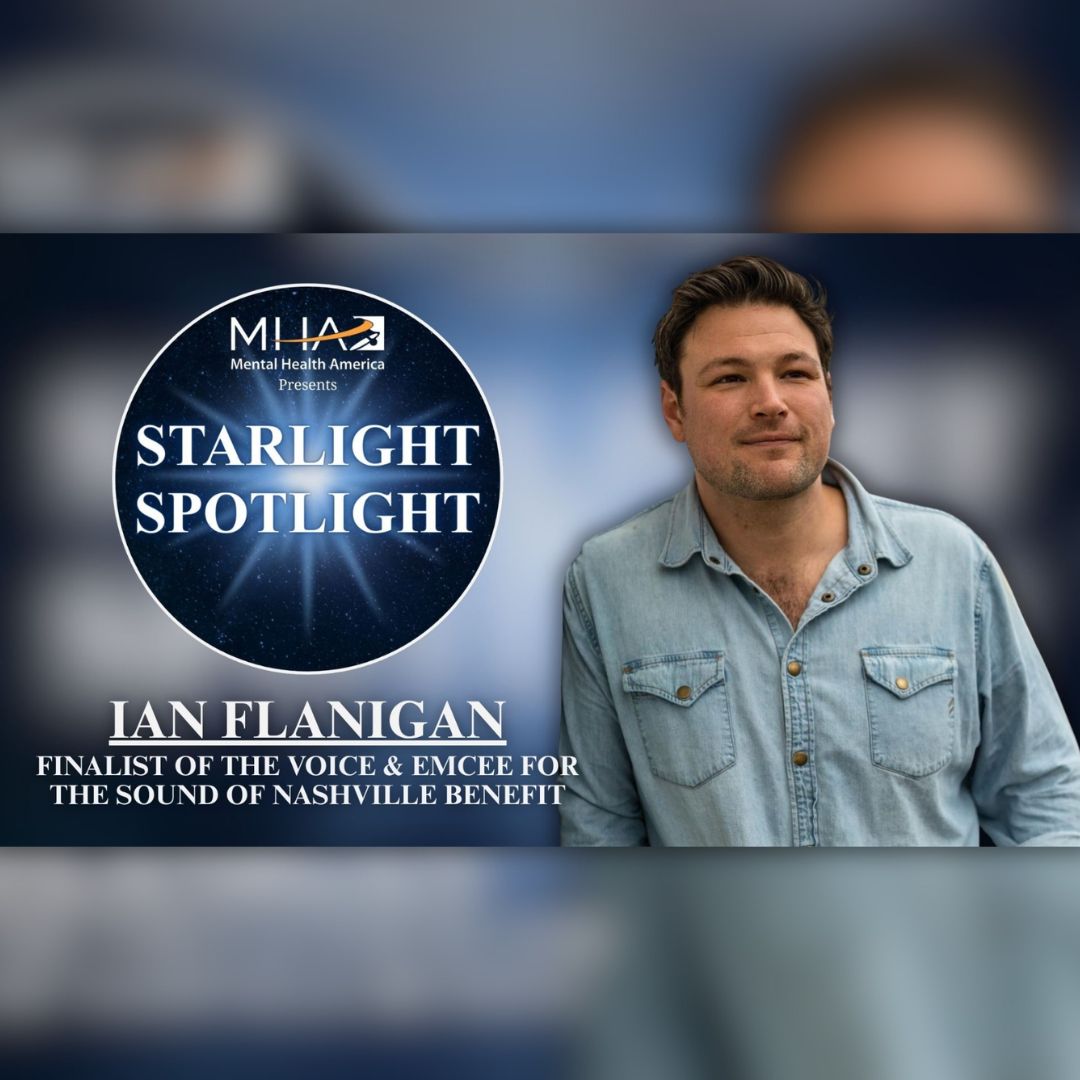
Hey there. And thank you very much for tuning into your best you real conversations on mental wellness brought to you by MHA of Dutchess county and the Northern and Southern Dutchess Community Coalitions. Not just that, we are having a starlight spotlight. Yes, this is our segment where we get to speak with industry leaders, professionals from in and around the Hudson Valley talking about their success and psyche. Today is the first of our numerous artists that are going to be featured at the Sound of Nashville benefit concert happening on October 6th. And it's very apropos that we are starting with this guy because not only is he going to be one of the performers, he's also our host and he's also one of our award recipients. So I think it makes sense that he's our first interview in the series in regard to the concert. So with us today, we have singer, songwriter and season 19 finalist of the Voice, Blake Shelton. His team leader specifically said he's a once in a lifetime vocalist. High praise. With us today we have Hudson Valley native Ian Flanigan. Ian, how are you, man?
[00:01:03] Speaker B: Hey, Connor. Thank you for having me on, brother. Appreciate being here.
[00:01:05] Speaker A: Absolutely. Again, thank you so much for being a part of this concert. Thank you so much for partnering for mha and it is so great seeing you again. We were just saying off the mic how last time we saw each other was at MHA's gala last year, and now this concert is essentially the stand in for the gala. So that's kind of cool how we're kind of upgrading.
[00:01:23] Speaker B: I know, it's awesome, man. I think it has been just under a year since we first met. But no, I'm honored to be a part of anything mha, all, all good causes here. So really just honored to be here.
[00:01:32] Speaker A: Yeah, absolutely. And again, not only you're going to be performing, but you're going to be emceeing it and you're receiving the Beacon of Hope award. That's huge. So how's it feel to be welcomed back in here in your home region, work on a concert of this scale with incredible performers in front of an incredible audience?
[00:01:49] Speaker B: Oh, it's going to be exciting, man. One, I'm super humbled and grateful to just be a part of this. These are really important, big missions, you know, and, and I treat it with a lot of care and a lot of respect because, you know, we're out here trying to save lives. So awards aside, one, I'm super humbled that they even thought of me for that, so I'm honored. But secondly, I'm excited to host a great night. These artists are all super talented, you know, some of the best in the world and really just hope to build a lot of relationships between the audience members, the artists and the mission itself.
[00:02:17] Speaker A: Again, we have a pretty stacked lineup besides yourself, which honestly we could have just had a concert with you alone and that would have done well. But besides that, we have Grand Ole Opry member Craig Morgan. We have two time Grammy War nominee Maggie Rose. We got viral sensation and up and comer Jake Banfield and we got Broadway to country star Brooke Morber. Have you had a chance to work with any of these artists before?
[00:02:37] Speaker B: Yes, it'll be my first time with Jake and Craig. This, this show will be my first time getting to meet them and I'm really excited. I'm a huge fan of both of them. Maggie, I have gotten to perform with and see her performances down in Mexico where she just is an insane talent. I've worked with Brooke Morber quite a few times and I produce some of her music and we perform together a few times a year. So it's going to be, it's going to be a little bit like going home and bringing the friends back and meeting some new people too.
[00:03:02] Speaker A: Oh, that's great. Yeah. I wasn't sure what the connections were all like, but that's awesome. I knew that you had some connection with Brooke, but I wasn't too sure beyond that, so. That's neat. It's a homecoming in a number of different ways. So that's nice that you're going to be able to experience that. Have you had a show at the Bardavant before?
[00:03:16] Speaker B: No, I had one scheduled about four years ago and we had to postpone it and it never ended up happening, which was heartbreaking because it is such a historic, gorgeous place to make music and I'm just so excited to be back here. It's a one of a kind building.
[00:03:30] Speaker A: Yeah. Cathartic in a way, I'm sure. It's like, hey, it's finally time.
[00:03:33] Speaker B: Well, it's always been a bucket list for me too growing up up there. It's, it's always been highly regarded.
[00:03:38] Speaker A: Speaking of growing up, up in this area, you were actually recently just here. You performed over at the Orpheum and then you also played at the Town Crier Cafe. I saw some clips of that. Incredible stuff. Walk us through coming back and doing these, you know, hometown shows like Orpheum. That's literally your backyard, wasn't it?
[00:03:54] Speaker B: Oh, yeah. I mean, so my family, we were Flanagan's Cleaners on Main Street. You know, my dad, my grandfather, we had a dry cleaning business there. So I basically grew up building and that is directly across the street from the Orpheum. I've seen a thousand movies there, you know, a ton of stories. But I recently found out that they were doing live music. And then I was like, you know, it's. It's hard to find a venue in Sorogates. So this would be perfect to get right in the hometown for a lot of people that don't travel out. It's just beautiful, man. They've done a great job. Upstate Films has really, really put a lot of love into that building. And you know, coming home, Sorghety says some of the best people in the world, man, those are my. They're my friends and family. So it's like just a big party coming together and everybody showed up and we had a good time. And you know, Town Crier down in Beacon, Phil, the man who owns it, he was one of the first people to kind of give me a couple shots, some larger stages, open mics, 10, 12 years ago. He's just a huge supporter of the music industry. There's not a lot of venues quite as beautiful and cared for and crafted in the sense of like his vision of how a night and how the entertainment should go. Really just an honor to be able to get on that main stage and connect with people and kind of full circle moments for me this past month, that's awesome.
[00:05:01] Speaker A: It's beautiful what you said there. I think that really ties it together. Upstate Films, they do such great stuff. I've partnered with them a couple of different times over the years, like starting back in high school, you know, for various things. And what they're able to do for the community is really outstanding. So I'm glad you were able to partner with them. And then when it came to Town Crier, you know, that's got a special place in my heart as well. I remember when they were still in Pauling, you know. So that was their, I believe, their second.
[00:05:25] Speaker B: 20 years ago.
[00:05:26] Speaker A: Yeah, 20 years ago.
Yeah, that was their second location. I can't remember what the first location was, but then Pauling and then now Beacon and you know, I've followed along, seen some fantastic shows. I've played the open mics there too. So. Dude, I totally get what you're saying. It's. Phil does such a great job over there of supporting live music, as my ex says. Supporting live music?
[00:05:45] Speaker B: Yeah, 100%. It's not easy, man. What he does is not easy work. So grateful for him.
[00:05:50] Speaker A: Not at all. But what you're doing is not easy work either. You know, putting yourself out there, making yourself a name in music and really grinding on it, I think that's huge. And to be able to get the following recognition that you have, Congratulations to you. I think it's been great and can only see you rising and rising from here on. You talked about growing up, living in your family business and whatnot, but when it came to growing up in this area, what was it that sparked your love for music and what told you to be a musician?
[00:06:17] Speaker B: Well, one. Thank you. That was very kind of you to say. Two, you know, since I was like 10 years old, and I mean like a kid, but right. First memories for me, I just never. I just had a very, very serious calling towards it. I didn't know why. It just made me feel good. I know my, my parents played like three records back to back and, you know, one was Creedence Clearwater Revival, one was Bob Marley's Legend, and my mom played a lot of Elvis. And somewhere in between all them is where I'm at today. And, I don't know, music just kind of made me feel good. Like I've always felt it, I've always seen it in like colors and like, I don't know how, why, but music's always been a really safe spot for me and just really healing. And I've never treated it other than a friend, really, you know, and I was the only child growing up in West Sarharty, so, you know, I had a lot of time to kill. I got a guitar and really it was just from there where I was like, hey, I don't really need much more. This is kind of perfect. And I, I got a. My first lessons from a guy named Chuck Massasi down in Glasgow, New York.
And Chuck, you know, he was just at my show in Sargarties. He's still a great mentor and a really dear friend to me. He leaned in in a way that I think helped. Helped it sustain for life. He didn't force feed me how to play guitar. He taught me how to compose my songs. I was always writing lyrics as a kid and he helped me shape them. And instead of necessarily guitar lessons, he kind of gave me like song crafting lessons. And really that's just where it was, was me and him and a lot of wood shedding.
[00:07:41] Speaker A: There you go. That's great. That's actually very similar to what I had with my guitar teacher too, Helen Avakian, who's another great Teacher who. She saw the. You familiar with Helen?
[00:07:50] Speaker B: Yes.
[00:07:50] Speaker A: Yeah, no, love Helen. And she saw the songwriter bug in me too. And yeah, it was more songwriting lessons than it was formal guitar lessons. Phenomenal stuff. So the fact that you had it so early on, one thing when it comes to the arts, you know, some people can be, you know, some people can be a little weary about it because it is a tough industry to get into. Was that a concern by friends, family, people in your community when you're like, hey, I find joy, peace and catharsis in music, this is what I want to do.
[00:08:18] Speaker B: You know, honestly, I would say it was the opposite for me. Where I have seen across my life in the country and different people I've met, where the financial instability or the kind of reckless nature of pursuing art as a full time career becomes more of a burden for society's mindset and that, that kind of weighs on you where it's like, you know, I'm going to be 37 and I'm still gigging, writing songs and that, that would scare a lot of people, you know, but I actually had a lot of family, friends and community that kind of put art just on the same pedestal as anything else. Where it was like, not just reckless passion, but if you treat anything with that intention and care like a business, then it is, you know, And I think that's, that's for everybody out there where, especially nowadays where, you know, you can come up with any idea and monetize it. But for me, I think it was more of an all consuming part of my life that everybody wouldn't imagine it any other way. So, you know, I was like eight hours a day playing since I was a kid.
There was no other path I was going to do. But man, I'll tell you, I had a lot of love. There was always friction and you know, people would have their suggestions, but for me it was always, I was going to do it till the wheels fell off, you know. They haven't fallen off all the way yet.
[00:09:29] Speaker A: No, that's perfect. I'm glad that you had that support in your life. I know I certainly did. But you know, it was funny because when I went away to music college, it was funny how many people that I was there in classes with whose families didn't support or agree with their decision to go to music college. And some of them who were just putting themselves through college and it's like, wow, I'm really lucky to have the support that I do. And it sounds like that you had very similar support in that sense?
[00:09:50] Speaker B: Well, I'll tell you. And it ties into what we're talking about with MHA and other organizations where people can financially support you, they can emotionally support you, but keeping that hope alive, where if somebody supports your dream and takes it seriously and lets you believe in yourself, that is worth more than any kind of other investment you could find. You know, and it ties into, like, the work we're doing right now with the recovery community, where as long as you do have hope and you can believe, then the rest will work itself out with effort. You know, it's when you. It's when you put doubt in people's minds, is when they hesitate and that hesitation keeps you from taking the right next step.
[00:10:24] Speaker A: Yeah, I hear what you're saying. You know, to quote, you know, somebody who grew up in this area as well, fdr, we have nothing to fear than fear itself. You know, obviously that was said about war times, but I feel like you can apply it to just about almost any other time in life because fear is the thing that holds us back and hope is the way that we combat that. I was going to save this question for later in the interview, but since we are talking about hope, let's talk about Hope Rocks for a second. That's an organization that you are very proud to be a part of. I was a part of one of the festivals. Was it last year? Last year? It must have been. It's a great festival. It's a great organization. Would you like to talk about your involvement with it?
[00:10:56] Speaker B: Sure, yeah. I've been on the board for Hope Rocks for almost seven. Seven years now. Oprah's is one of these organizations. It's super rare because there is literally no music festivals around recovery.
It's a hard topic, and it's hard to bring people out and celebrate while you're kind of addressing these.
These harder issues, you know. And the main mission of Hope Rocks is destigmatizing mental illness, isolation, addiction, depression, all of that, because the. When you can remove the stigma, you can begin a conversation where people are relaxed and, you know, understand that you're not alone. And there are resources and help, and it's very normal, you know, and that's. That is the mission, in essence.
And what Joe Defino and the whole team over there have done, I think is pretty remarkable because the amount of moving parts and people that it takes to do these kinds of things, especially when it's not, you know, a standalone structure venue that's built for this, it's like they. They do pop ups they show up all over the place, and that amount of effort and coordination takes a lot of love. So these people are, you know, living and breathing this, and they're some real good work.
[00:11:54] Speaker A: No, it's great stuff over there. The festivals, the music, the work, very inspiring. And the fact that you're behind it and part of it, that's great. You know, bringing community, charity, and music all together. That's the way that we can create change and we can create love and create great art. With that being said, you said the recovery community. That is something that is very near and dear to your heart, especially because, you know, you're very much a part of it. You and I talked at the very end of the MHA gala last year about both of our struggles with alcohol, and that was something that we were able to kind of bond over at the time. Being a musician out on the road and the stresses and the lack of sleep and the pressures that you're under. Could you walk us through what that looked like for you, going through your struggles and then the overcoming that substance issue?
[00:12:38] Speaker B: Yeah, sure. I mean, everybody's story is so uniquely different. And I really do believe a lot of the addiction or abuse of any kind of substance is really a band Aid on an underlying issue. You know, for me, I've gone through therapy for years and have addressed a lot of those underlying things to where alcohol or drug use was really something. I used to self medicate and cope a lot and try to just disappear.
And that was my struggle. I think what happened to me is I left pretty early on. You know, 17, 18, I was living in Watervliet, up in Albany, and then I moved down to Orlando, was gigging there. And back then, the whole mentality of what we do as artists was live in a city for a year, saturate the marketplace much as you can, then pack up and move to another city and do the same thing for a year while you split your time going backwards. And then eventually you have, you know, a national touring route because you've lived across everything. And that, honestly, is still the framework for a great grassroots musician. But it's a hard life. And, you know, when you're starting out, you get paid in alcohol, you get paid and, you know, favors and things like that. And it's not a traditional business. And I got caught up in that young, and I had a few older musicians in my circle that they were going through their own undiagnosed problems. But, you know, when your life becomes, you know, 9pm till 2 in the morning, Every time. And you're just abusing everything because it's also the only monetization you get is just sets you up for a really bad habit. And for me, I think it was a mixture of being kind of lost as a young guy, not really knowing where I belong or how to make this work, or having any really structured framework for what I needed to do, mixed with all these influences, and then just honestly loving it. You know, that's the. The other side of addiction is you learn to love it. It becomes your best friend, and by the time you're messing your life up enough to say goodbye, it is.
It's a hard goodbye, because not only is it physically dependent, but it's also your crutch. It's your.
One of your best friends. It's very. It's very awkward love story is what it is. So, you know, I ended up getting in trouble a few times and checked myself into a rehab eventually, and that did great work. But I did relapse, and then I went out on my journeys again, and about a year later, I went into a detox, and I was really, really messed up. And. And that one just clicked for me. And music was kind of a gateway into it. But also it was the one thing that really pulled me out. You know, I dove into the songwriting harder because I came to a point where I realized this will never happen because my addiction is going to ruin any chance of anything, career, relationships, whatever it was, it was all gone down in flames. I just dove back into why I loved it when I was a kid. Like, we were talking about, like, that friend replaced this. This new one that was killing me, and I just dove into the artistry. I dove into the craft, you know, and music gave me enough again. But I took a hiatus from that, and I. I replaced it with substances and just very grateful that I. I had those chances to start over. Not everybody does, you know, And I understand how lucky I am. Wow.
[00:15:47] Speaker A: That's beautifully painful, what you were able to describe right there. But it's fascinating what you were able to go through. There's a couple of things that you said through your journey that I just want to, like, focus on for a second. Thank you for bringing up the fact that you relapsed at one point. That's huge when it comes to people's recovery, because so many people are scared of the relapse or so many people don't want to talk about a relapse because they feel like it makes them look weak or it makes them look like they're not trying. You know, we deal with people all the time here at MHA who are saying that or fearful of that, but the fact that, you know, you brought it up and you say that's part of your journey and, you know, it helped you. Thank you for saying that.
[00:16:23] Speaker B: Of course. I mean, like, you know, that was the short version. There's 50 relapses. There's definitely multiple. So anybody listening going through. Through it, I. I just wish you all the best in love and don't even hold on to it. It's one day at a time for a reason, you know, and it's. We get a lot of bumper stickers in the community, but they're there for a reason. One day at a time. If that was yesterday, it's not here today. You know, today's brand new.
[00:16:46] Speaker A: The other thing that I want to focus on there is how you're saying music, you know, in a way got you into it, but also got you out of it. And how you referred to it as an old friend is like, you know, the old friend was able to help you out is like return you home. Kind of very similar to the themes that we've been talking about already of coming home here to the Hudson Valley, hosting this concert, doing all these things together. There is a catharsis to it. I thought that was beautiful what you said. So now I'm curious. Timeline wise, was getting clean before or after your time on the Voice?
[00:17:15] Speaker B: It was before I. I got clean about six years before. My timelines are terrible. About six or seven years before. The Voice. I hadn't been using for a really long time by the show, which, thank God, because there's a lot of pressure in those situations. And I saw some people that were relying on their. Their crutches and vices. And, you know, I. I think I needed about half a decade to get through that one.
[00:17:37] Speaker A: Understandable. You know, it takes everybody different timelines. So it sounds like you got to the Voice at the right time in your life, then you were ready. You were. It seemed stable enough in that regards. What was that like? Walk us through the decision to even go and do the Voice and then what it was like once you got there.
[00:17:53] Speaker B: Sure. My story is always really different. I didn't ever watch the show growing up. Just some clips. You know, I understood that in American Idol, what it was about, but they were always very cover heavy. You know, it's all cover music. And as a raspberry baritone, I just never even considered the show because I do all original Music. And, you know, if I sang Journey, it doesn't really hit the same way, you know, but I was on my travels. I was on a tour for about a year, I guess, and I just come from Texas to Nashville, and I was only going to stay in Nashville for about two or three months, had a few shows, and I got in Nashville in 2020 when tornado hit East Nashville. It was really terrible, Just destroyed a lot. And Covid was just beginning, you know, just beginning to run rampant. And, I mean, they were, you know, closing borders. Everybody was panicking, buying toilet paper and Lysol, and, you know, if you remember, it was wild. And my last show that didn't get canceled was an open mic at a place called the Mercy Lounge. You know, I was running out of money and was debating just posting up and not going. And I went to this open mic, and it ended up being a scouting opportunity for the show. So after I played with the house band there, I. I had a gentleman come up to me and ask me if I wanted to be a part of this next season, and they were looking for alternates. So I basically had a very sideways, backdoor approach to getting on the show. I. I basically said, you know, I just lost every gig I had, and I'm living in a trailer park, so I would love to be a part of this. Wow. Yeah. And I went in with a different mentality than a lot of people because I wasn't necessarily seeking any of this. So when I got there, I understood that I was also an alternate for the show and I might not audition at all. So I went in with very low expectations, and I think the key to life is, you know, having low expectations and then celebrating whatever happens.
[00:19:32] Speaker A: Yeah.
[00:19:33] Speaker B: So I got to go in really calm and just kind of look at it as a learning opportunity of maybe, you know, that really helped me because I didn't have this intense pressure.
[00:19:42] Speaker A: Yeah. And when it comes to the Voice and being an alternate, so, yeah, that is kind of like a backdoor method of getting in there. One thing that a lot of the main populace doesn't quite understand, there's a lot of steps before you get up to the stage, and you have the four judges who turn around for you. There's a numb. There's a lot of things that have to happen before you get there.
[00:20:01] Speaker B: Yeah, there's months of it. Months of it. You know, between meetings, you know, song selections, multiple auditions, background checks, all that good stuff. They take it very seriously, and they're super organized. So it is a no joke situation. But they're also extremely kind and, like, uplifting. And, you know, I'm sure there's a lot of horror stories from these kinds of television shows, but for me, I thought everybody was super sweet and it went really, really easy as far as the coordination of it. You know, it's hard to move people across the country to go live in Hollywood.
[00:20:33] Speaker A: It is tough. That is a very, very tough people.
[00:20:36] Speaker B: They bring out hundreds of people. So, yeah, you know, it's a lot of process.
[00:20:39] Speaker A: So when you do finally get to the moment of being up there on the stage and having this opportunity, you have all the chairs turned away from you. How daunting that must feel. But then when it came to getting selected, were you hoping right away it was like, dang, I really hope I get team Shelton. Like, what was. What were. What was your mindset?
[00:20:56] Speaker B: I. I'm going to tell you something. One of the things in my life, I've always been, like, my least fan, if you have a greatest fan. I'm always, like, not into what I'm doing in a sense. I'm always trying to get better, and I'm always like. I kind of downplay a lot of things, so I can be my biggest critic most days. But my main focus was don't fall. It's very dark. There's no light, and you get out. And I was like, I'm going to be the guy that goes up and falls on my face and then botches the whole song. So I was like, literally a second by second kind of contestant up there. I was like, if I get to the mic and don't fall, then I will start on time and then I will see what happens. So my mind works like that with shows where I don't actually think big picture. I'm very present, and that's where I'll forget lyrics and miss notes sometimes because I'm just riding the line in real time. So my brain kind of fogged out the whole experience. It's very, very cool. It's very. It's a really beautiful studio. It's very big. And the chairs, I was like, well, those are real. You know, it's.
It's fun, man. It's cool. But I also. I do that because it also takes away a lot of pressure. You know, I don't get worked up too much because if I live right here in front of me and I don't get in my head and think about what could happen, I don't feel like I get nervous. So I. I have a very, very particular Way I go about life like
[00:22:13] Speaker A: that and then going on to work with Blake Shelton and you guys put out that song together. Grow up.
[00:22:18] Speaker B: Yeah. Blake is awesome, man. I was, you know, I was like, well, John Legend would probably be a really great coach to have because he has such a different background and he's piano bass that he could probably help me arrange things I would never think of. Blake would be my first choice because I feel like we're pretty similar in, like, vocal range. And his coaching would probably help me the best for my actual work I'm doing.
And, you know, getting to meet Blake, it's a crazy experience. And we were also during COVID time, so you had to keep some distance. But as the show goes on later and later, you stick around, the fewer people are there and you get more one on one time with each of the coaches. And, you know, after. Towards the finale, I mean, we were all spending an hour, two hours in studios and. And rehearsing and recording stuff, and it was really fun. And after the show, you know, I signed with Reviver Records and. And really it was David from Reviver that kind of reconnected Blake and I. And I sent Blake a couple song options, and I was like, hey, I'm going to release this. Thank you for everything. I love you, man. And, you know, if you want to jump on one anytime. And he actually hit me back and was like, I love this song. Grow up. Let me come in on it. And I kid you not, he met me in Nashville at Starstruck studios.
Yeah, he came through, spent a few hours and laid his vocals down real quick, and we just hung out and it was awesome, man. Kind of. Kind of hard to like, thinking back, I'm like, that is a crazy experience.
You know, what a humble guy. Like, he didn't have to do that. He didn't have to do nothing. And, you know, he gave me. Gave me plenty of his time. He collaborated on a song that'll live forever, and, you know, he's had me out on the road open for him a few times, and I just got nothing but love and gratitude for that guy. He really changed my life.
[00:23:54] Speaker A: It really never know.
[00:23:56] Speaker B: So go to the open mic, everybody.
[00:23:57] Speaker A: Yeah, go to the open mic. You never know what's going to come out of it. You're right. So with the kind of partnership, mentorship, friendship that you have going on with Blake and the fact that you said, you know, he'd probably be the coach that you probably relate to the most, learn the most from in that regard, what would you say is one of the top lessons that you learned from him.
[00:24:17] Speaker B: Oh, 100 authenticity. Vocal coaches are all over the show. There's plenty of technical support for that kind of structure and technique. But Blake has this thing where he is constantly himself. He's not out there trying to be what he thinks somebody's gonna want to see or hear. And that was a really reassuring lesson that I kind of got from him. Like, I'd be on the mic trying to hit different kinds of notes, and I was in my head thinking, like, what does the show want? And he's like, man, nobody's here to listen to you sing super high notes, like, you be you, and that's where you're gonna shine. It is something that I take into the studio every day, where it's not about trying to do what you think other people want from you. It is literally being yourself. How does this sound for you? Like, how does Connor sing this? Like, what is Connor sing this? Like, when nobody's watching?
And that is. That is the answer. And that is something I live by and something I try to help with other artists that I'm producing, too, where it's like, let's get out of our heads and let's just be as authentic as we can.
[00:25:16] Speaker A: That's the way to go about it. Absolutely. Because it's through that authenticity that people will truly be able to relate and gravitate towards you. You know, I've said this a couple of times on the show. You know, you look at movies that are the big blockbusters, and funny enough how blockbuster movies aren't selling the way that they used to, and people are wondering why. Well, it's because they're trying to relate to everybody so much. And when you try to relate to everybody, you're not pleasing anyone. But then when you have the films that are super specific and niche, that you're like, nobody's going to relate to this. When you take that chance and when you are that authentic, that's when people are like, I see something in this, or I see something of myself in this. And that's when they gravitate towards it. So. And so, that being said, the years after the voice, how do you feel like those lessons in that time on the show affected your career afterwards? It's like, I would imagine, I'm hoping pretty positively.
[00:26:07] Speaker B: Oh, yeah, they definitely have. I've been really fortunate, very blessed from that show. And, you know, when you're living in life, hindsight's 20 20, right. And sometimes this world and entertainment business gets really fast paced and you. The only thing you can do is one day at a time, look right ahead and just get it done. And as the years go by and the tours end and new tours begin and the albums come and then you do another one, it's. It's very important to, like, stop, pause, and, you know, find gratitude, but also reassess what you've done. Trials and errors and like, the roller coaster of it all. And, you know, looking back, the experience of the Voice really broke down a lot of personal walls. I had before any of this. I used to drink a lot because I had a hard time being in public. You know, I had a hard time being social or. Or the guy on the mic. Like, it was very uncomfortable, let alone ever, like, post a picture of myself for no reason. It's very, very uncomfortable.
The Voice will take you and completely break you down at that. I mean, they do three hours a day of interviews and photo shoots, and you're like, oh, my goodness, I'm going to just die inside. But.
But that experience set me up to be able to try and be a part of this new world of online music and online self branding and doing the work that needs to be done so that your art can be heard. I think a lot of people who aren't in the arts wouldn't necessarily understand that. Maybe. But if you're an artist or you're a musician, the hardest part is selling yourself. We all love to disappear and make records, but the hard part is actually the record is 10 of the work. The other 90 is going out and posting about it or branding it and pushing yourself and touring and all of that stuff, which can be really uncomfortable if you're not comfortable in your own skin. So the Voice really helped me become comfortable in my own skin and accept that and embrace authenticity. And if I didn't do that show, I probably wouldn't post ever, because I'd be. Often I'd just be out in the woods making music, you know, so that'd
[00:28:01] Speaker A: be tough in a day like today. So that's good. I'm glad that the show was there for you, and I'm glad that you're here for all of us now, you know, for us to adopt your music into our lives. I've been enjoying your music, and there's a couple of things with your music now that I'm very curious about.
Post show.
What would you say has been one of the most meaningful experiences that you've had? Whether that's been recording or on the road or interacting with fans. What is something post the show that you couldn't have had prior to the show that just has really stuck out to you?
[00:28:33] Speaker B: Well, there's a lot, you know, I'll keep it to. One, the way life works is, you know, if I didn't do the show, I would never have gotten on the booking agencies and the labels that I've worked with, which have led to my travels, which I would have done it very differently. And those travels introduced me to my now wife, who we have two beautiful twins.
And you know, my, my girls and my, my wife really are my whole life now. And in a serendipitous way, every single thing connects, you know, where it's like, if I didn't go on that stage, it wouldn't have brought me to the life that I have today with my family. Because, hey, here's the thing. We love music, we love art, but your family's everything, you know, and you're going to always make a new song. But you know, your family that you build and, and cherishes, like sacred stuff, man, and, you know, hopefully it lasts a very long time. And I was brought to mind through, you know, pursuing all those opportunities. So it's. That's not a career one as much as a personal one. But, but really, if I didn't, I would not have met my wife and had these beautiful babies, man. Yeah.
[00:29:33] Speaker A: Oh, my God, that's crazy. Yeah, I know.
[00:29:35] Speaker B: That is.
[00:29:36] Speaker A: You look at the domino effect that happens in your life and it's like, how the heck did I make it here? Oh my gosh.
[00:29:42] Speaker B: I know, because like, yes, I love the industry, I love making records and all this. But isn't that wild? Like, if I didn't go on that show, I definitely would not have been traveling the way I did. So.
[00:29:52] Speaker A: Wow, that is something. And I think that's a great segue into your upcoming release. If I have this correct, you're releasing Long Way Home. And if I looked into it. Right. That was something that you wrote for your wife, right?
[00:30:05] Speaker B: I did, yeah. Yeah, I've. We always have this little joke where I write so many songs about addiction and the devil and all this stuff ain't the heaven and hells. And. And we go to the open mics where my buddies will have like back to back dedicated love songs to their wives. And. And my wife will look over at me after the show and be like, that's really sweet of them.
[00:30:23] Speaker A: Wink, wink, nudge, nudge.
[00:30:24] Speaker B: And you know, I've been. I always write her love songs, but this one's special to me because when we first met out in Colorado, we were with a group of people, and I really liked her, and I kind of pulled her to the side, and I was like, hey, do you want to take the long way back? And that was my move. And she said, yes. But I wanted to tie a deeper message, too, where it's like, this is for my wife. And a lot of it's about just kind of creating a little more time to be together, because life overwhelms you with everything you got to do. And sometimes you got to force just a little bit more time, Even if that's just take the long way home.
It gives you that little time together. But I tied a lot of a few notes back, back home for me, you know, up in the Catskills, and just kind of describing. Describing that thing.
And really it's just an upbeat kind of country Celtic tune that tries to capture that. That little moment.
[00:31:10] Speaker A: That's great. That's great. And again, if I have my notes correctly, that's June 3rd.
[00:31:15] Speaker B: That's coming out June 2nd or June 3rd.
[00:31:17] Speaker A: June 2nd. It might have been June 2nd.
Yeah, very close.
[00:31:20] Speaker B: I know that.
[00:31:21] Speaker A: But you might be right, I might be wrong. It's all good. June 2, June 3, whatever that week is. So this episode will be coming out before then. So roughly a week before then. So a week from now. Go check that out. Pre save it. I'm assuming you have pre save links, right?
[00:31:35] Speaker B: I do. I got pre save links and all the things.
[00:31:37] Speaker A: Well, make sure that that's in the description of this episode, that so you'll be able to pre save it, and then you'll be able to listen to it once the song is out. In one week of this releasing, two weeks of us recording this. There you go. Very good. Ian, I know we're kind of getting to the end of this episode, but again, greatly appreciate you. And I know this is not the last time we'll be speaking between now and October, but that being said, is there any last little nugget that you want to share with the MHA listening audience right now? It could be about the concert, could be about something we talked about, could be about something we haven't talked about. Is there any last little nugget that you'd like to leave the audience on?
[00:32:10] Speaker B: Sure. Well, one thing. Thank you, Connor. You've been awesome and love your work, love your music, love everything you guys are doing, you know, for everybody listening mha, I know this is going to be a really awesome, fun concert. I'm honored to be a part of it. But the other thing is, come on out and have a great time and you won't even realize that you're a part of changing lives. You know, this is a, these are big, big things and they help people that are very close to our neighbors and our friends. And just being there is all the work you got to do. Just come out and have a good time and be a part of a great cause. So love you guys and really appreciate this man.
[00:32:40] Speaker A: Appreciate you, Ian. Seriously, very grateful for everything that you're doing, a part of this and the energy that you're bringing to it. Again, make sure that you come out to the sound of Nashville in the Hudson Valley's Queen City, happening at the Bardavan on Oct. 6. That's a Tuesday, by the way, but we're going to be having a lot of fun midweek. We're going to have Ian along with Craig Morgan, Maggie Rose, Jake Banfield, and Brooke Morgan Moriber. We're going to be bringing down the house and we're going to be making a change for a lot of people out there, just as Ian said. For more information on the concert and for more information on Ian's music, like his upcoming song Long Way Home, just go to the description of this episode. Whether you're watching on YouTube or listening wherever you enjoy podcasts, we'll have that all together for you. For mha, Starlight, Spotlight and your best you, I'm Connor Walsh saying make sure that you shine bright today. All the best to you.
[00:33:26] Speaker B: Sa.